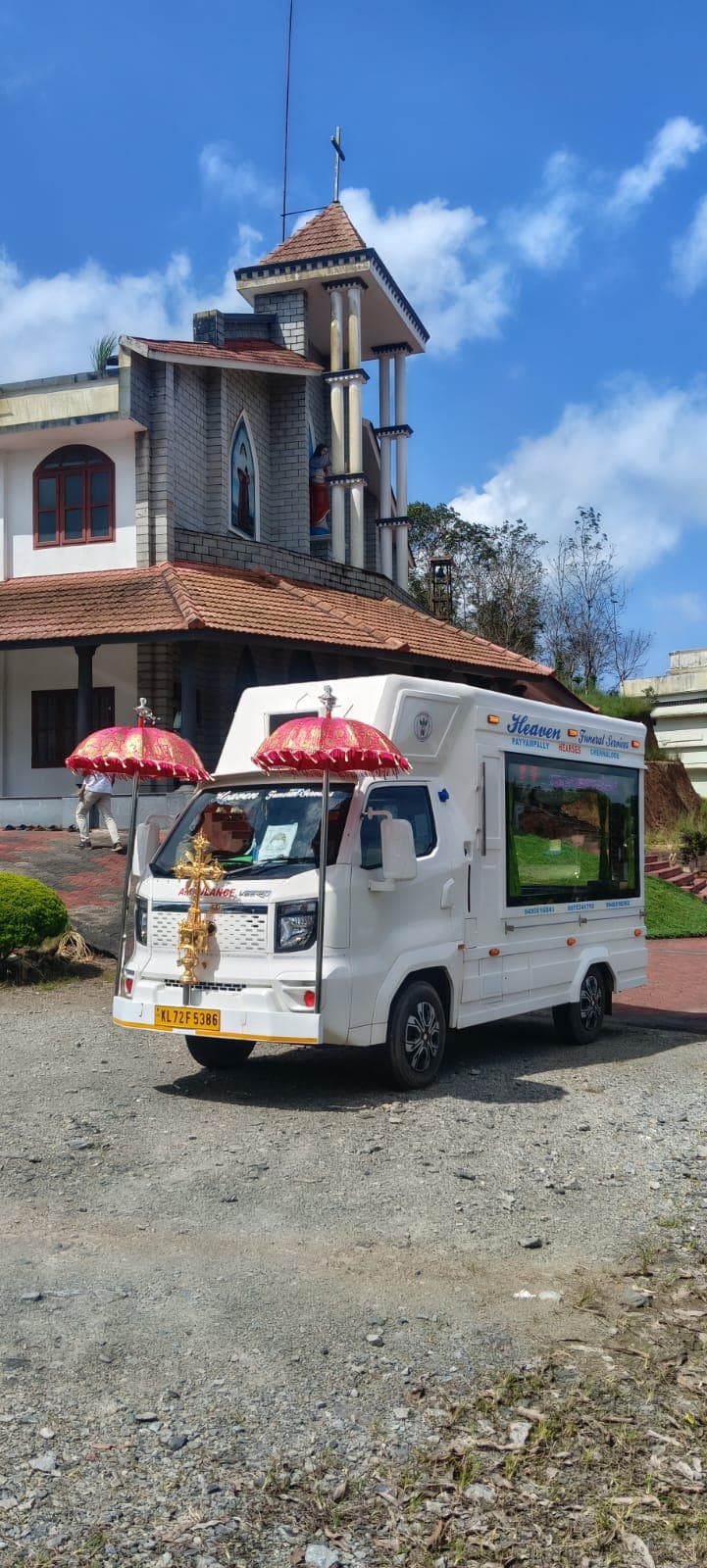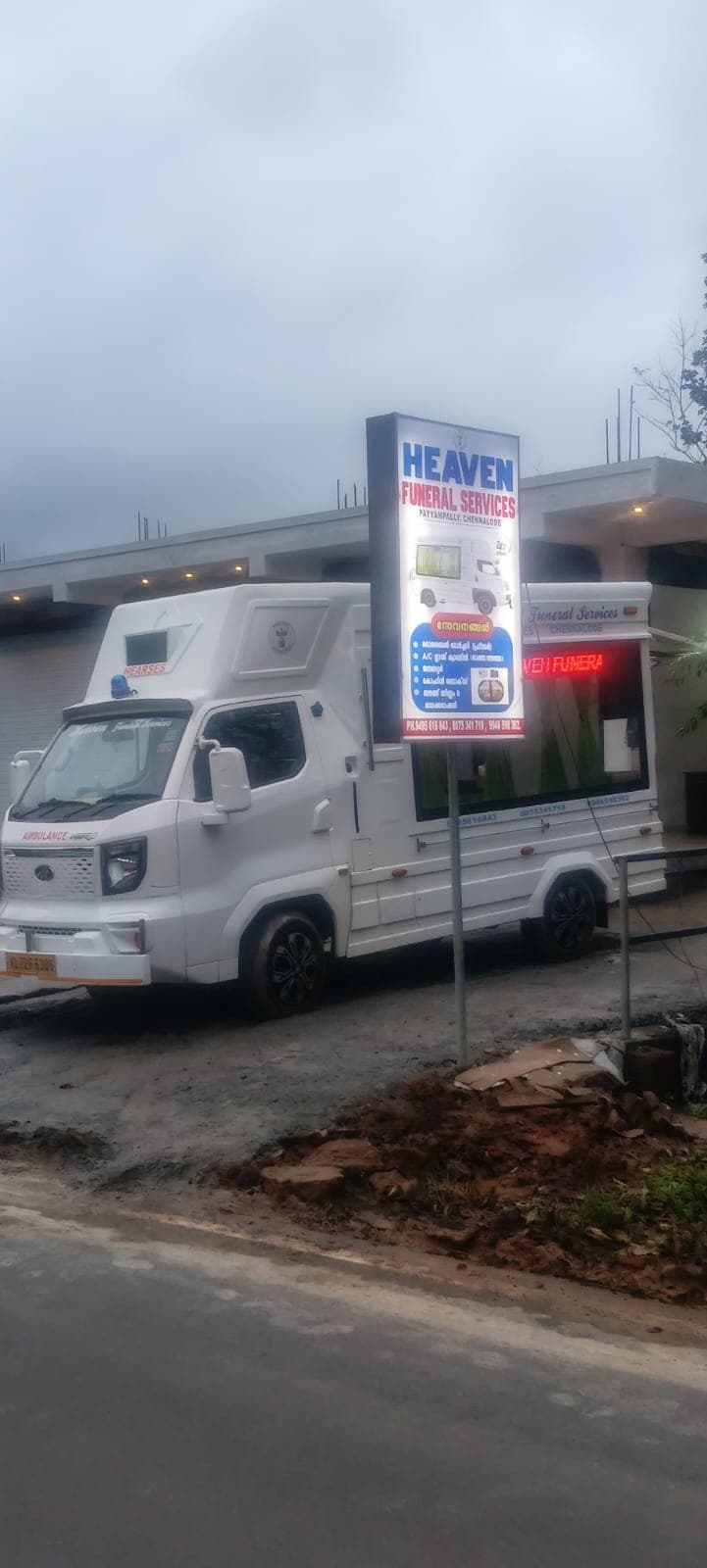
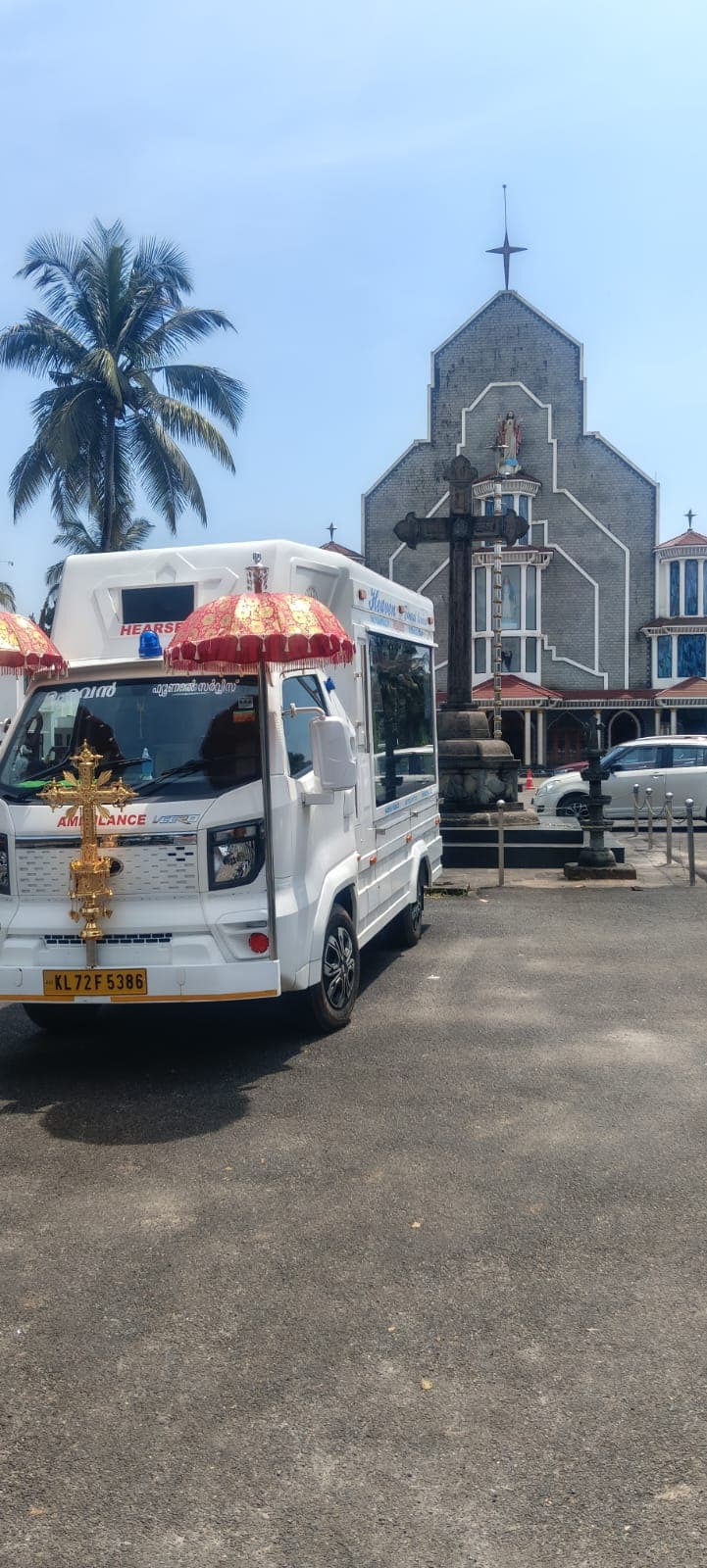
Christian funeral arrangements are the core of what we do, and the Payyampally shop sits close enough to the northern parishes that we are often at the church before the family has finished making calls. What follows is how one of these mornings actually runs.
The timings are settled with the priest, not guessed
Once the parish sets the hour, we speak to the parish office ourselves. That one call decides everything downstream: when the coffin has to reach the house, when the body is moved, when the hearse leaves, and how long the cortege needs on the road.
It matters because a church has its own day. There may be a Mass before, a second service after, or a cemetery that has to be opened. A family trying to hold all of that together on the phone, on the worst day of their lives, is a family being failed by whoever is arranging the funeral.
What goes out from the shop
All of it travels together. One vehicle, one arrival at the house, one team carrying it in — rather than four separate deliveries through a doorway that already has fifty people standing in it.
- The coffin, lined and fitted, with the lid cross the family chose.
- The processional cross that leads the coffin into the church.
- Candle stands and the candles for the house and the church.
- Floral work for the coffin and for the vehicle.
- A mortuary freezer box, where the body is resting at home until the service.
At the church
The hearse is brought to the door and positioned so the pallbearers have a clean lift and the family a clear path behind the coffin. Our men stay back once the coffin is on shoulders; that part belongs to the family and to the parish, and we are there to make it possible, not to be part of it.
Afterwards the vehicle goes on to the burial ground. If the cemetery is at another parish, or the family ground is up a road that a full-sized hearse cannot take, that is worked out beforehand rather than discovered on the day.
Every denomination, and every faith
We work with Catholic, Orthodox, Marthoma, CSI and Pentecostal parishes across the district, and the arrangements shift with each — the cross, the vestments, the order at the graveside. We ask rather than assume.
Families of other faiths call us just as often, for the hearse van, the freezer box, and the transport. The care is the same. The arrangements are whatever that family's rites require.