Wayanad's parishes sit where the people sit — on ridges, at the end of estate roads, up gradients that a long wheelbase simply will not take in the monsoon. A hearse that looks impressive on a highway and cannot reach the church door is of no use to anyone.
That single fact shaped the vehicles we run.
Built to reach the church, not to look good on a highway
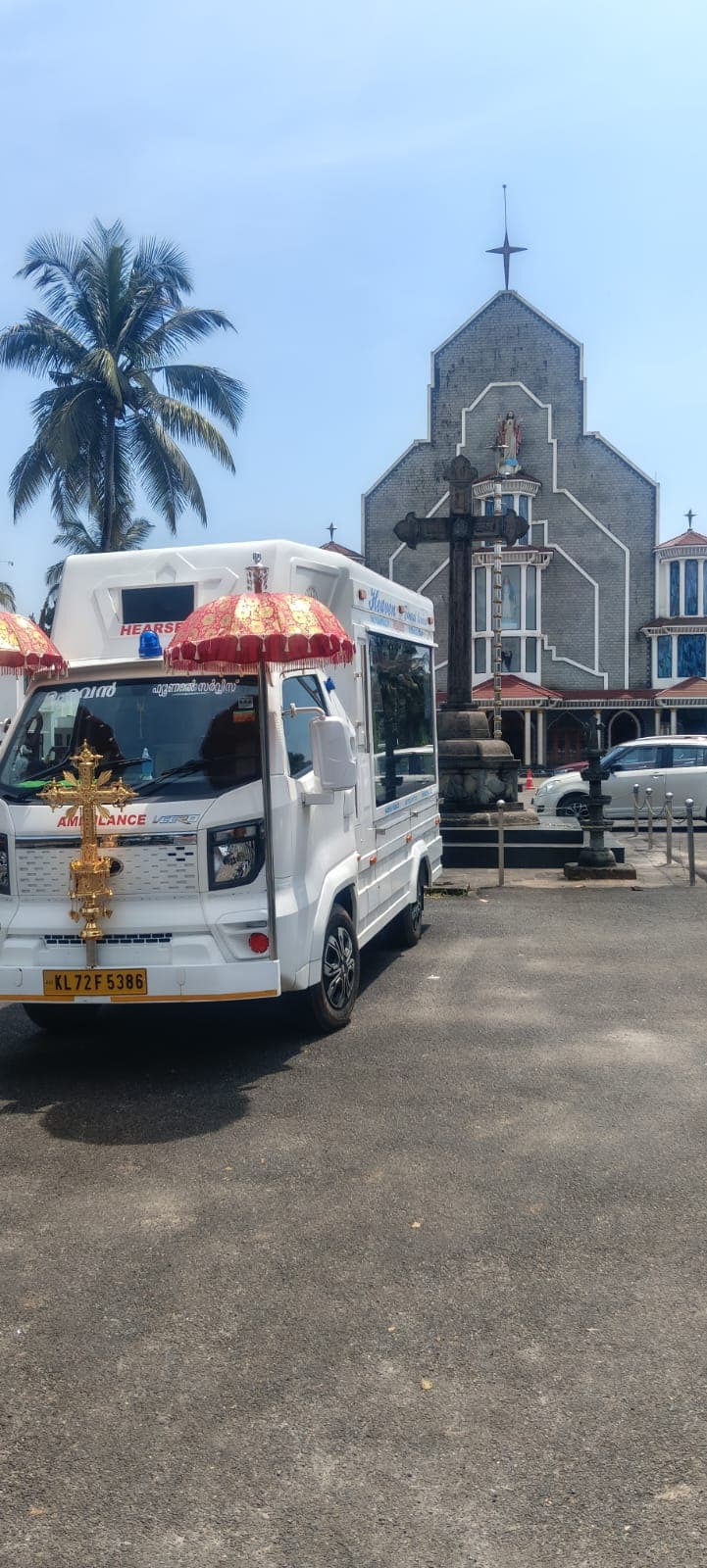
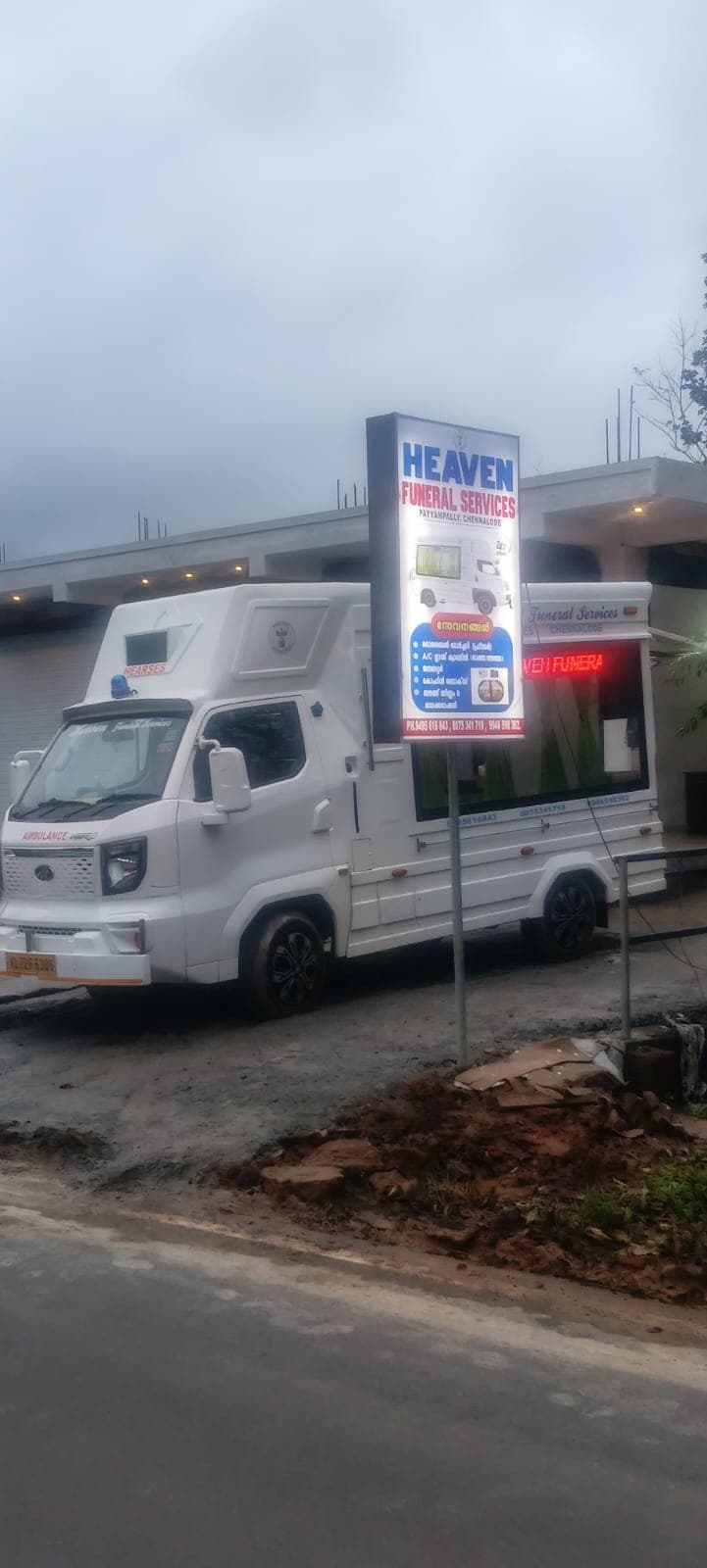
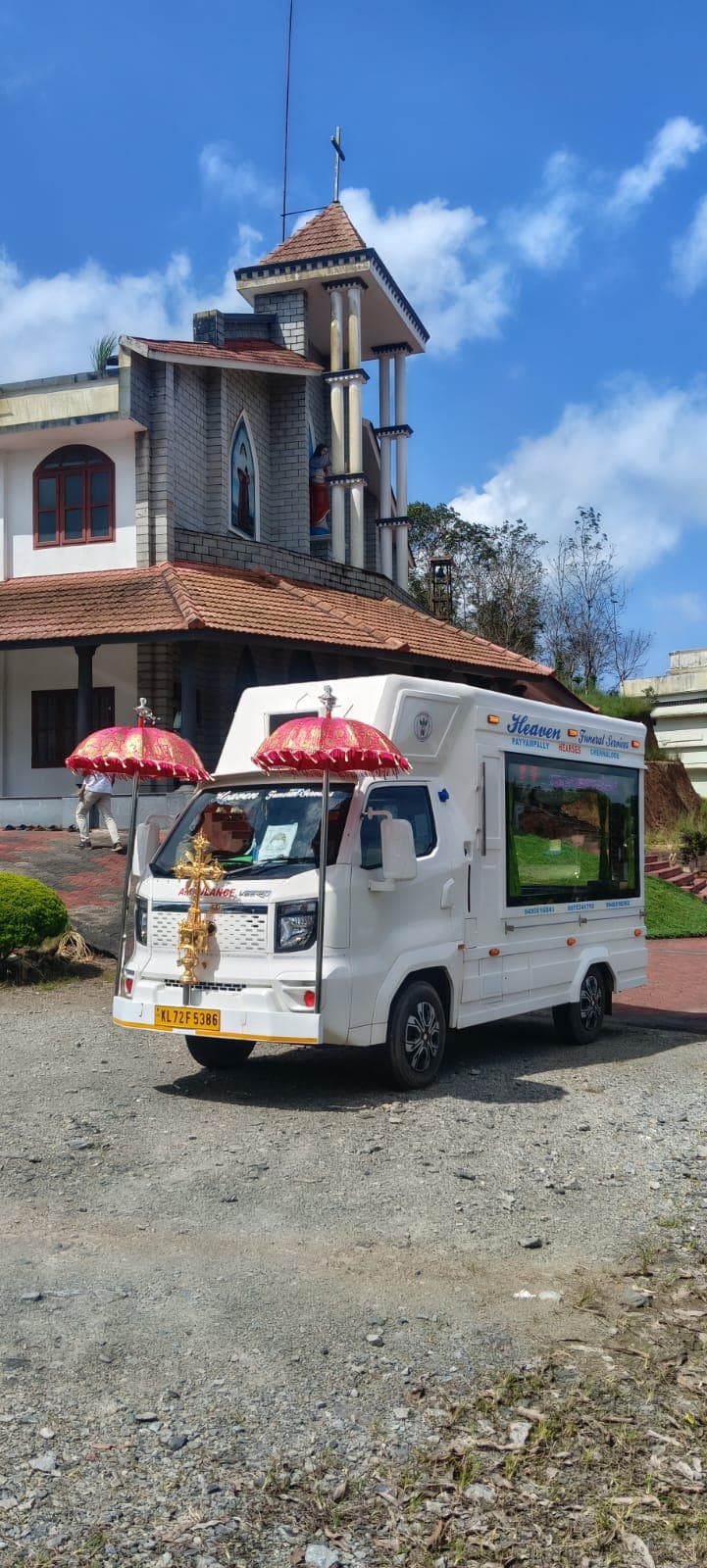
Our hearses are compact, enclosed, and high-glazed — small enough for a hill road and a narrow parish compound, tall enough inside for the coffin to be carried level. The cabin is fully enclosed and curtained, so the body is private from the moment it is loaded until the moment it is carried out.
They are our own vehicles, maintained by us and driven by our own people. Nothing is subcontracted to an outside operator. The team that answers your call is the team that arrives.
The route is worked out beforehand
Four questions, asked on the phone the day before wherever there is a day before. It is not complicated work, but skipping it is how a hearse ends up reversing three hundred metres down a wet estate road with a church full of people waiting.
- Where the body is now — house, hospital, or mortuary.
- Where the service is, and the state of the last kilometre of road.
- Whether the cemetery is at the same parish or another.
- Where the cortege will form, and where the vehicle can turn.
Decoration, where the family wants it
The ceremonial umbrellas, the floral work along the vehicle, the cross at the front — these are arranged for the family who want them and left off for the family who do not. Neither is more correct. We ask, and we do what is asked.
Beyond the district
The same vehicles cross regularly into the Kannur and Kozhikode border areas — Iritty, Kelakam, Peravoor, Thalassery, Thamarassery — and go on to Karnataka and Tamil Nadu when the journey calls for it. Long-distance work is planned differently, and there is a separate post on how that runs.