A great many Wayanad families have people working in Bengaluru, Mysuru, Coorg, Gudalur, Chennai and the Gulf. When a death happens there, the first thing the family wants is for the person to come home — and the distance between wanting that and arranging it is filled with paperwork nobody has seen before.
We do this work regularly. This is what it involves.
What has to be in order before the vehicle moves
Some of this can be gathered while the vehicle is already on its way to collect. We will tell you honestly which items can wait and which genuinely cannot, so nobody spends a morning chasing a paper that was not needed yet.
- The medical certification of the cause of death, from the hospital or attending doctor.
- A no-objection or transit clearance from the local police where the death occurred, where the circumstances require it.
- Embalming, with its certificate, for any long journey — this is not optional and it is what makes the rest possible.
- Identification documents for the deceased and for the person accompanying the body.
- The death registration, which can often follow rather than precede the journey.
The journey
Routes out of Bengaluru and Mysuru come down through Gundlupet and Muthanga, or through Kutta and Mananthavady depending on the hour and the forest gate timings — which close, and which have caught out many an unplanned journey. From Tamil Nadu we come through Gudalur. From the coast, up through Thamarassery or Kuttiady.
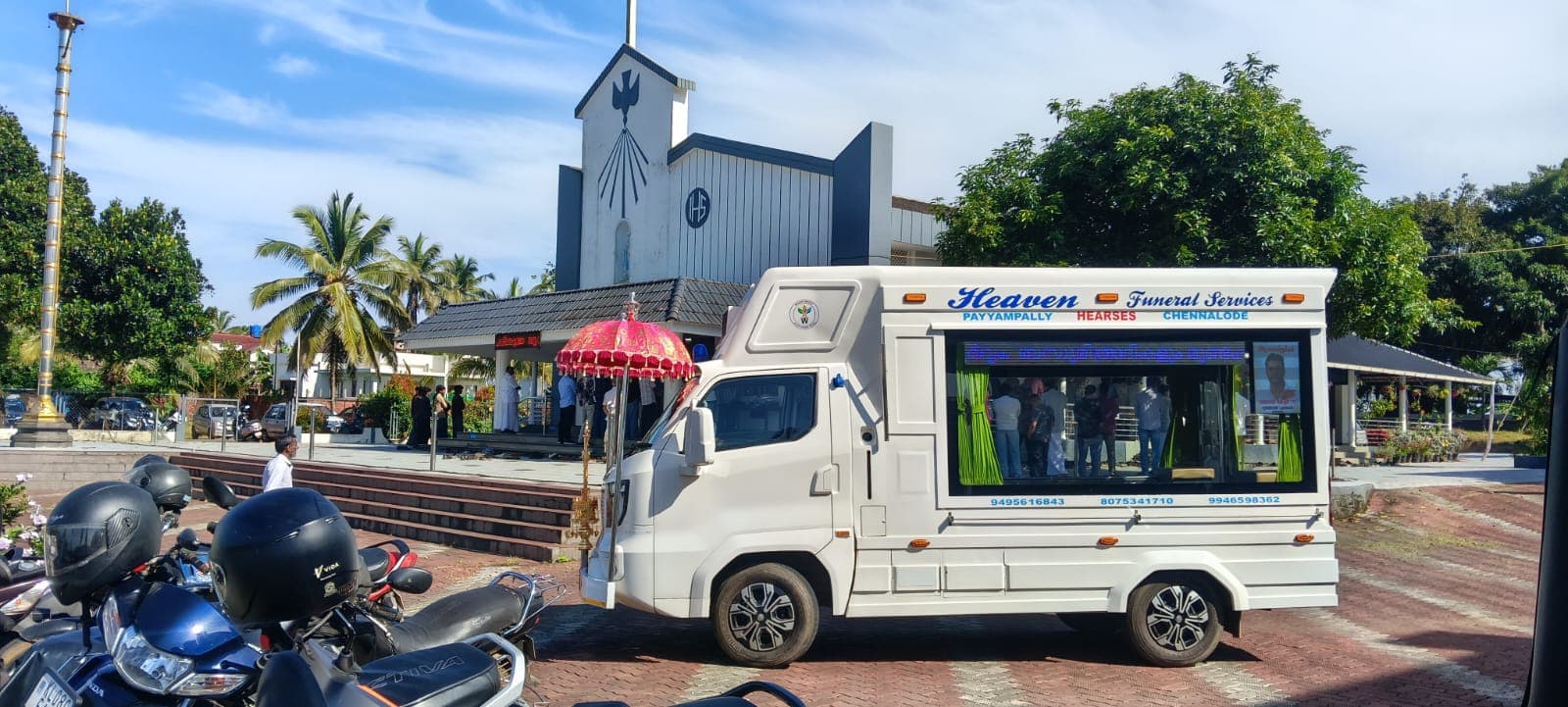
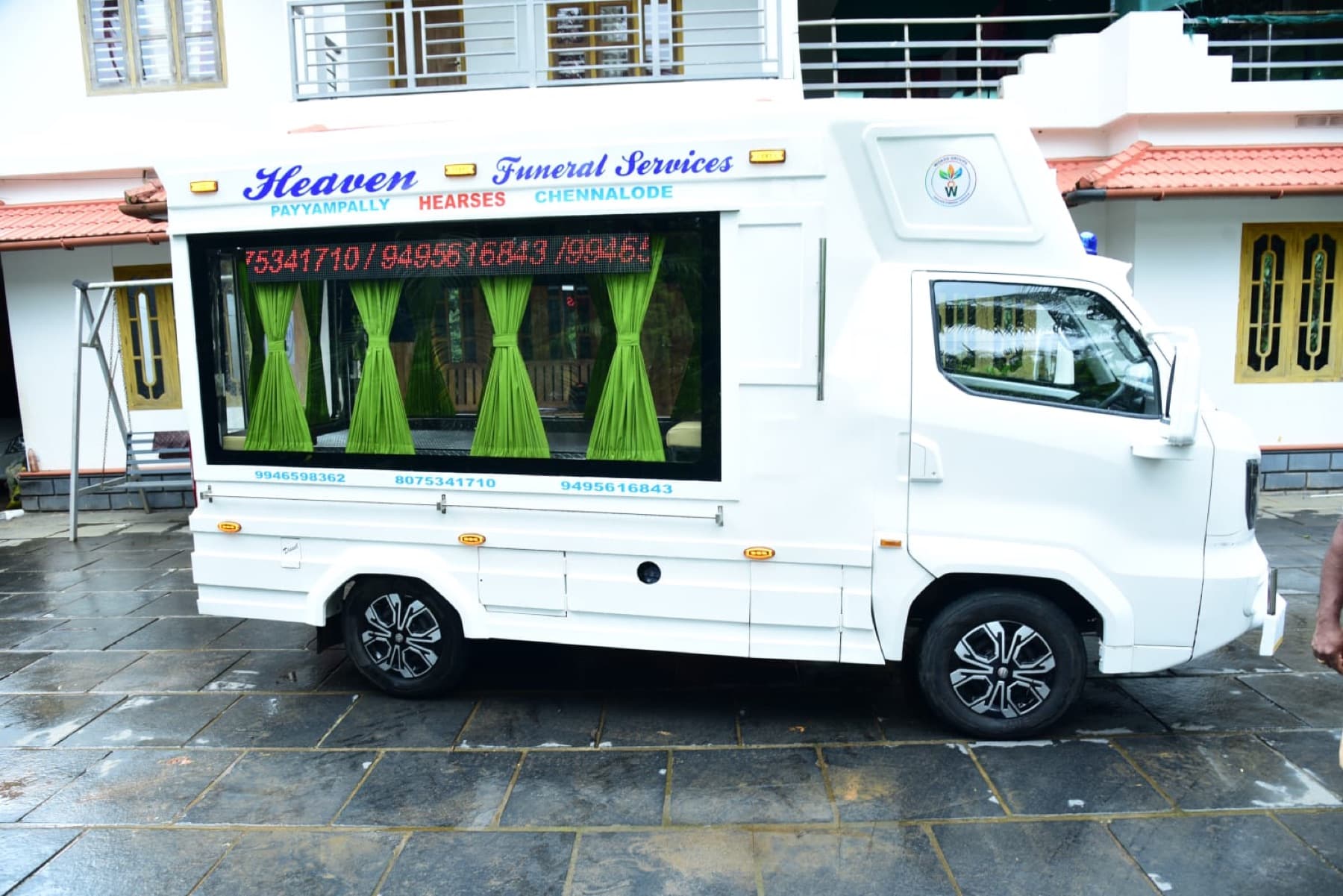
Our own vehicle and our own driver make the journey. The body is enclosed and private throughout, and the vehicle stops only where it must.
The family is kept informed
Someone at home is always waiting, and the waiting is unbearable in silence. We give an honest estimate at the start, and we update as the journey goes — including when it slows down. A late arrival that was communicated is manageable. A late arrival that was not is cruel.
Meanwhile the parish can be spoken to and the service provisionally set, so the family is not starting arrangements from zero at the moment the vehicle arrives.
At the other end
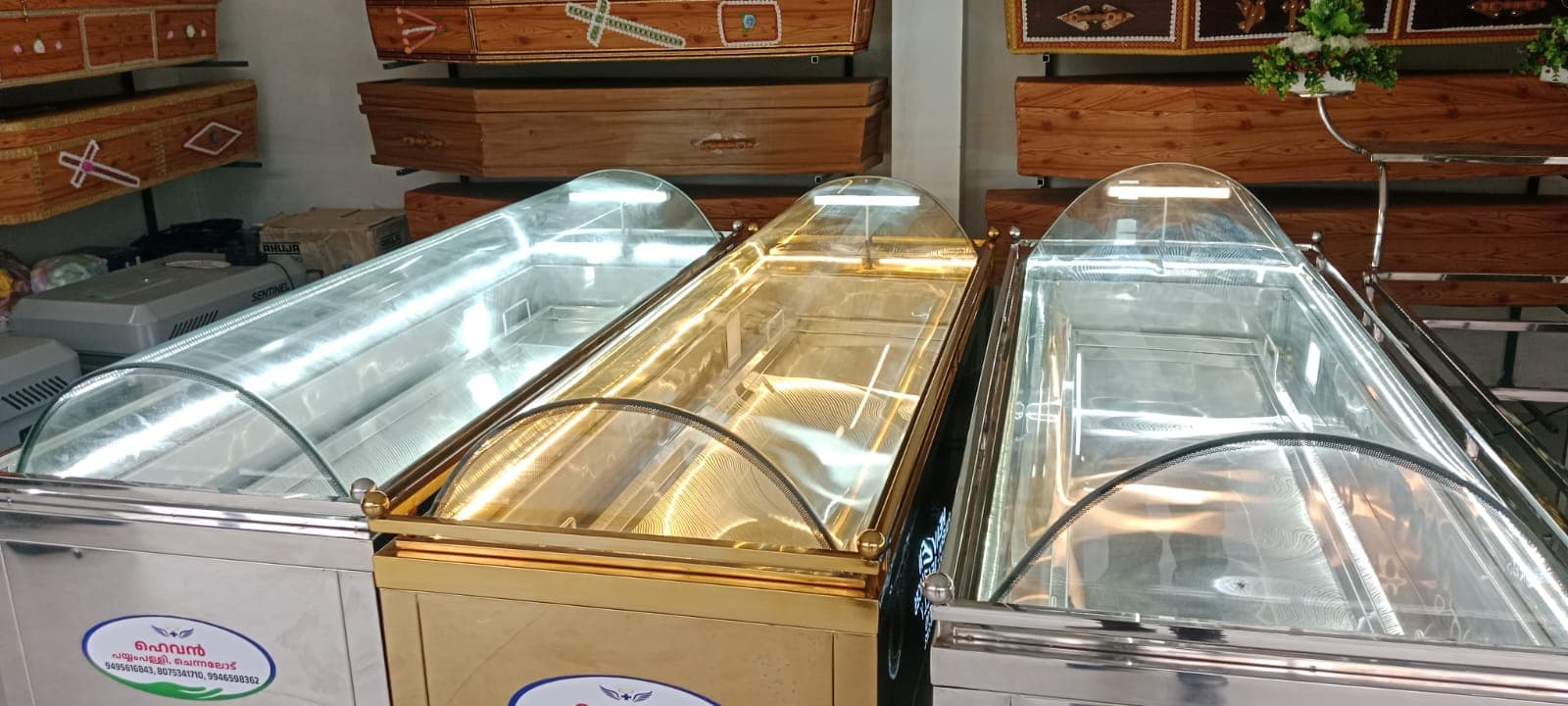
The vehicle comes to the house. A freezer box can be waiting there if the service is the following day, the coffin and the cross come out from the shop, and the funeral proceeds as it would have done had the death happened at home.
That is the point of the whole exercise. Not the logistics — the fact that the person is home, and that the family gets to hold the funeral they would have held anyway.