When someone dies at home, the house fills with people within twenty minutes and almost none of them, including the family, knows what has to happen first. There is no single correct order, but there is a sensible one, and knowing it takes a great deal of pressure off the two or three people who end up carrying the arrangements.
This is written for Wayanad in particular — for a house in Payyampally or Vellamunda or Meppadi, where the parish is close, the hospital may not be, and the relatives who have to travel are coming from Bengaluru or the Gulf.
1. Get the death certified before anything else
If the death was expected and a doctor had been treating the person, call that doctor or the nearest hospital. A medical certification of the cause of death is what every later step depends on — the burial permission from the panchayat, the registration of the death, and any travel outside the district.
If the death was sudden, unattended, or in any way unclear, the police have to be informed and the body goes for a post-mortem. Do not move the body in that situation, and do not let anyone else move it either. It is a hard thing to insist on in a full house, but it saves the family a serious problem later.
2. Call the parish
The priest sets the time of the funeral, and once that time is set, everything else is planned backwards from it. The parish office will also tell you what the cemetery needs and whether there is another service already fixed for that day.
Get the time in writing on somebody's phone. Half the confusion in the days that follow comes from four relatives each remembering a slightly different hour.
3. Call us, and say three things
When you reach us, you do not need to have decided anything. Tell us the location of the house, the hour the priest has set, and roughly the height and build of the person. That is enough for us to move.
- The location — a landmark and a panchayat is enough, we know the roads.
- The hour the priest has set, or that it is not yet fixed.
- Whether the body is at the house, at a hospital, or at a mortuary.
- Whether relatives are travelling and how long the body needs to be kept.
4. The freezer box, if people are travelling
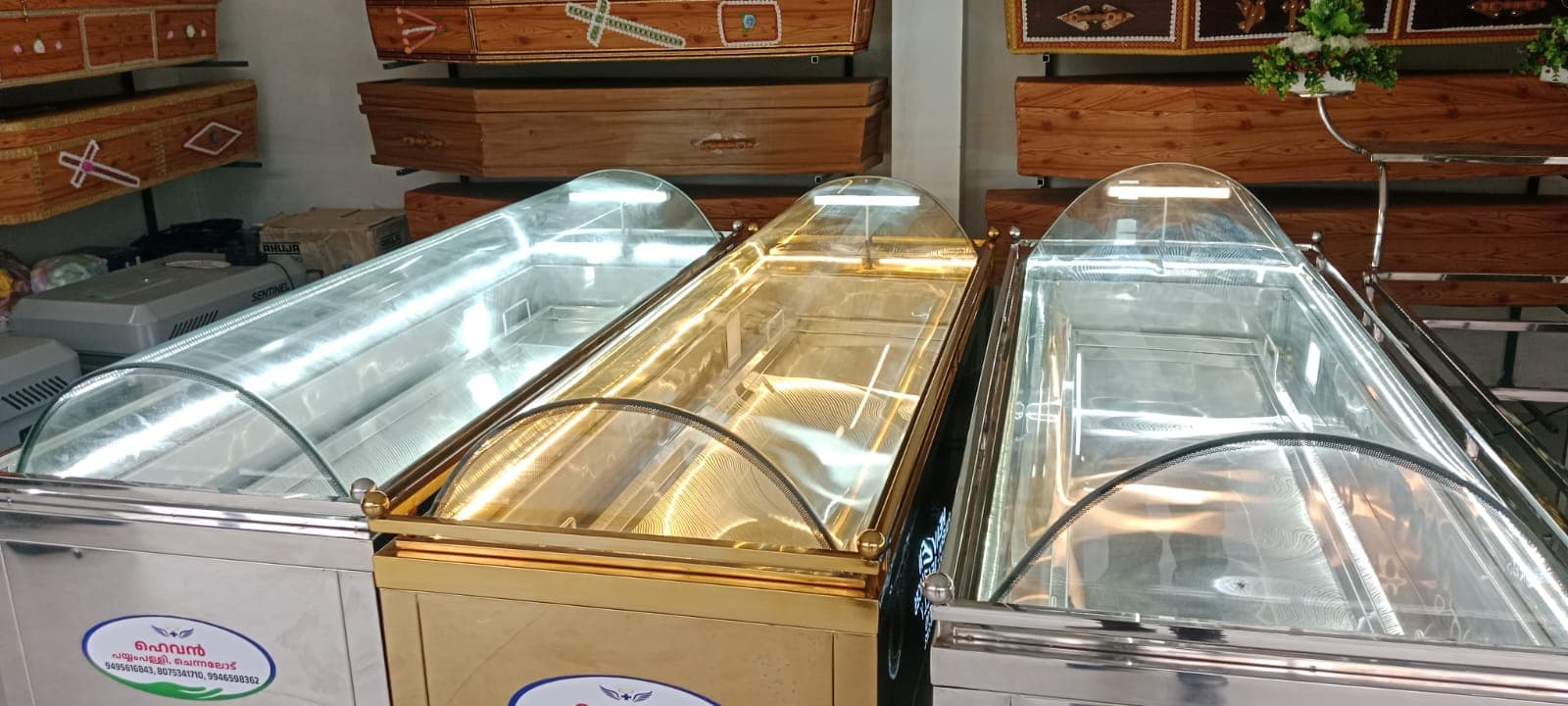
This is the decision that most often gets made too late. If a son is flying from the Gulf or a daughter is driving from Bengaluru, the body has to be kept, and a mobile mortuary freezer box is how that is done at home rather than at a hospital mortuary.
We bring the unit to the house or the parish hall, set it up, and collect it once the rites are done. It runs off an ordinary domestic connection. It is charged by the day with no minimum hire, so nobody is committed to more than the family turns out to need. Tell us on the first call that people are travelling, even if you cannot yet say when they land.
5. Let the arrangements come to the house
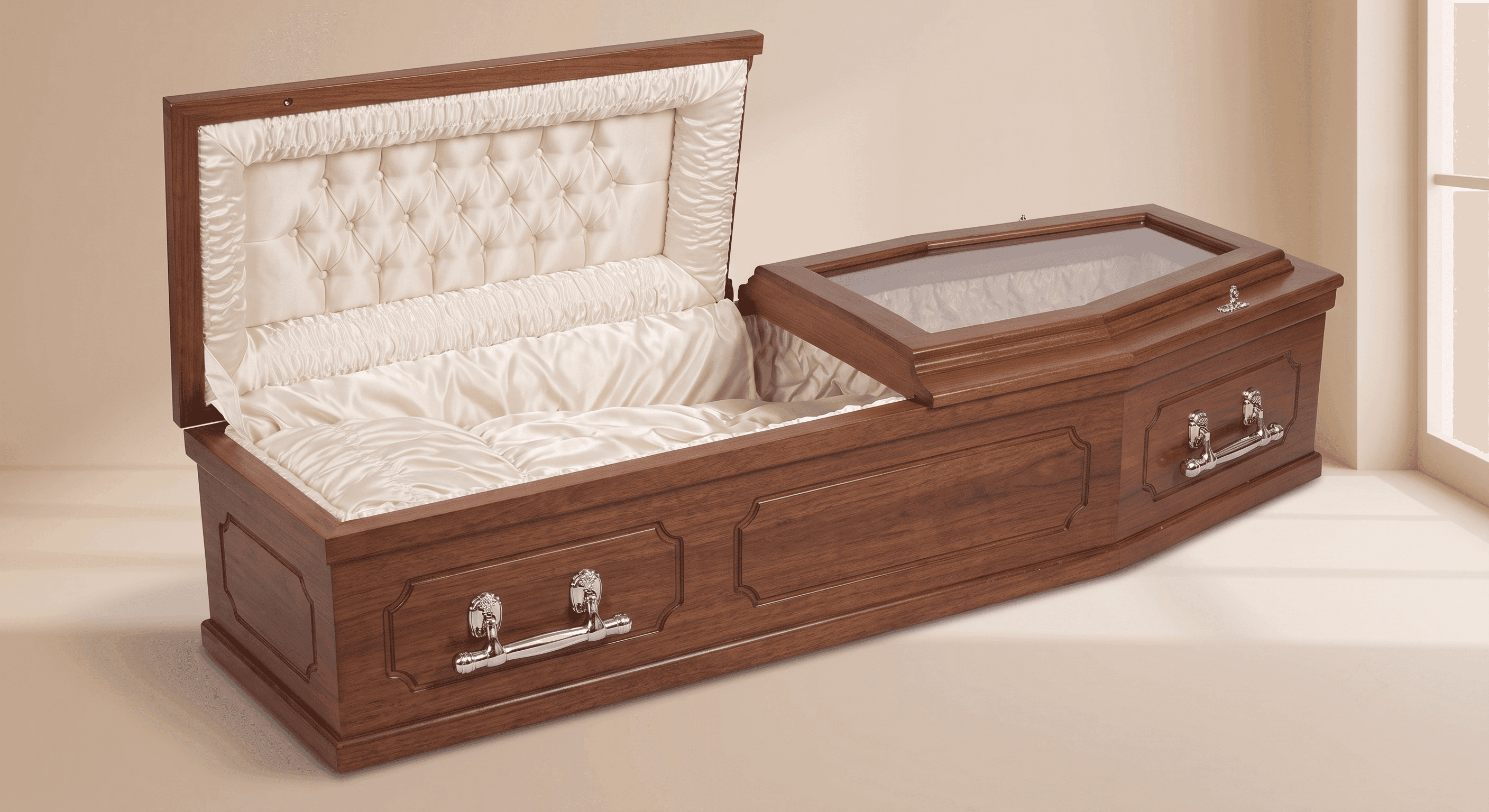
The coffin, the processional cross, the candles, and the floral work all come out from the shop together. One person from the family can come to Payyampally or Chennalode to choose the coffin if they wish, and most do — but if nobody can be spared, we will send photographs of what is on the floor over WhatsApp and bring what is chosen.
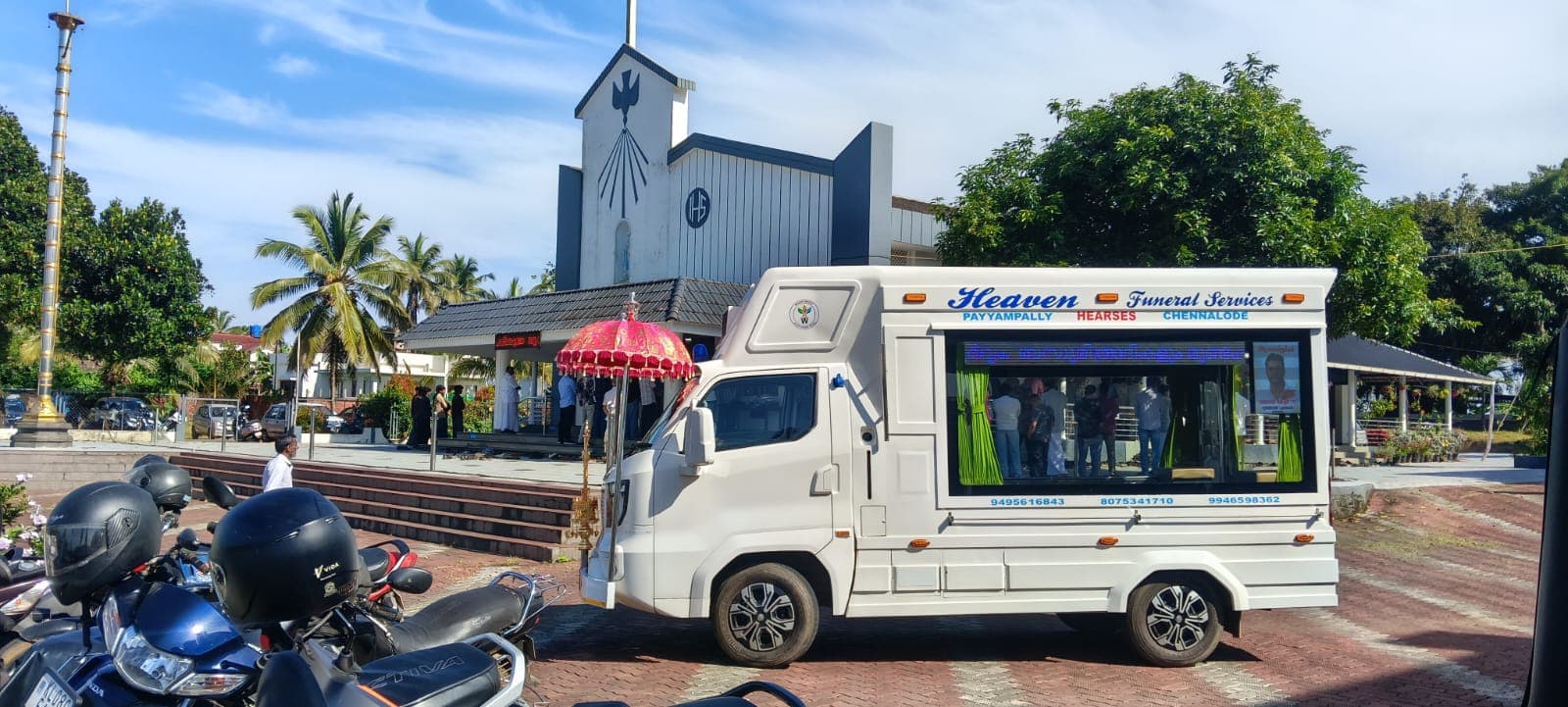
The hearse van then carries the coffin from the house to the church, and on to the burial ground afterwards. The same team that took your call does the journey. Nothing is passed to a contractor.
What you do not have to do in the first hour
You do not have to settle the cost, decide the coffin, or work out the paperwork for a journey out of state. Those all have time. What has to happen in the first hour is the certification, the call to the parish, and the call that starts the arrangements moving.
Our lines are answered at every hour of every day, including Sundays and festival days. There is no wrong time to ring, and there is no question too small to ask.